Welcome to HITOP FORKLIFT
EN

Language

Language
Save
icon Inquiry cart ( 0 )
News & Events

The Definitive Guide to Selecting the Right Forklift for Your Operation

Views : 147
Update time : 2026-04-03 16:15:01
In the intricate machinery of modern logistics and warehousing, the forklift stands not merely as a tool, but as the central nervous system of material handling. The selection of a forklift is a capital-intensive decision that ripples through operational efficiency, safety protocols, and long-term financial health. A mismatch between machine capability and operational reality results in bottlenecks, excessive maintenance costs, and safety liabilities. This guide dissects the critical parameters for selecting industrial forklifts, moving beyond basic specifications to analyze the nuanced factors that drive productivity.
 

Analyzing Operational Environments

The first variable in the forklift equation is the environment. The days of a "one-size-fits-all" fleet are over. Modern facilities require a stratified approach to equipment selection based on the physical constraints of the workspace.
 

Indoor vs. Outdoor Dynamics

For operations confined to indoor warehouses, the electric forklift is the undisputed standard. These machines offer zero emissions, low noise profiles, and require less maintenance due to fewer moving parts compared to their internal combustion counterparts. They are essential for environments where air quality and noise levels are regulated. Conversely, for outdoor yards or construction sites, the internal combustion (IC) forklift remains king. Powered by diesel, gasoline, or LP gas, these units provide the torque and traction necessary for uneven terrain.
 

The Narrow Aisle Challenge

As real estate costs soar, warehouse managers are building up rather than out. This vertical expansion necessitates narrow aisle trucks. Standard counterbalance forklifts require roughly 12 to 13 feet to turn; narrow aisle reach trucks can operate in aisles as tight as 8 to 10 feet. Selecting a machine with a compact chassis and a high-lift mast is not just about storage density—it is a mathematical imperative to maximize cubic storage capacity.
 

Decoding Load Capacities and Duty Cycles

A common pitfall in procurement is focusing solely on the maximum lift capacity while ignoring the duty cycle. The duty cycle refers to the intensity of use over a specific period.
 

Understanding the Duty Cycle Spectrum

  • Light Duty: Operations running less than 4 hours a day.
  • Moderate Duty: Standard 8-hour shifts with intermittent use.
  • Heavy/Severe Duty: Multi-shift operations (24/7) or harsh environments like cold storage or steel manufacturing.

For severe duty applications, a standard forklift will succumb to fatigue and failure rapidly. In these scenarios, a robust machine is required due to their robust mast construction and heavy-duty axles. For instance, a cold storage forklift requires not just a specialized cooling system for the hydraulics but also heated cabins and corrosion-resistant coatings to withstand freezing temperatures.
 

The Ergonomics of Efficiency

In the 2026 industrial landscape, operator retention is as critical as machine performance. A forklift is only as effective as the human controlling it. Fatigue leads to accidents, and accidents lead to downtime.
 

Interface and Visibility

Manufacturers have invested heavily in ergonomics. Features such as panoramic masts, which minimize hydraulic hoses in the driver's line of sight, significantly reduce "neck strain" and accident rates. Furthermore, the integration of intuitive control handles—where lift/lower and tilt functions are consolidated—allows for smoother operation and reduces the cognitive load on the operator.
 

The Shift Towards Automation

The trajectory of material handling is undeniably autonomous. While fully autonomous forklifts are gaining traction, the immediate future lies in semi-automated assistance. Technologies such as side shifters and rotatable carriages allow operators to manipulate loads without repositioning the entire vehicle, saving seconds that accumulate into hours of productivity over a year.

Furthermore, the integration of smart dispatching systems allows forklifts to communicate with Warehouse Management Systems (WMS). This connectivity ensures that the right machine is deployed to the right location, optimizing traffic flow within the facility.


Maintenance: The Hidden Cost of Ownership

The purchase price is merely the entry fee. The Total Cost of Ownership (TCO) is dictated by maintenance requirements.
  • Electric: Higher upfront cost, lower TCO. Requires battery management and watering (unless lithium-ion).
  • IC (Internal Combustion): Lower upfront cost, higher TCO. Requires oil changes, filter replacements, and emission system checks.


Conclusion: Partnering for Operational Excellence

Selecting the right forklift requires a forensic analysis of your operational needs. It demands a balance between the physical constraints of your facility, the intensity of your workload, and the ergonomic needs of your workforce. By prioritizing durability, integrating telematics, and choosing a manufacturer that aligns with your specific duty cycle, you transform a simple equipment purchase into a strategic asset that drives operational excellence.

At Hitop Forklift, we understand that every warehouse has a unique heartbeat. Whether you require high-capacity diesel units for rugged outdoor terrain or precision electric models for narrow aisle logistics, our engineering team is dedicated to providing tailored material handling solutions. We invite you to explore our catalog to see how our machinery can integrate into your workflow. Contact us today for a personalized quote and let us help you lift your business to new heights.


Related News
Read More >>
How Long Do Forklifts Last? How Long Do Forklifts Last?
Dec .25.2025
Discover the average forklift lifespan (hours & years), key factors that affect durability, and practical tips to extend your forklift's service life. Learn when to repair or replace.
Customized RAL Color Forklifts, Scissor Lifts & More Shipped to Paraguay Client Customized RAL Color Forklifts, Scissor Lifts & More Shipped to Paraguay Client
Sep .29.2025
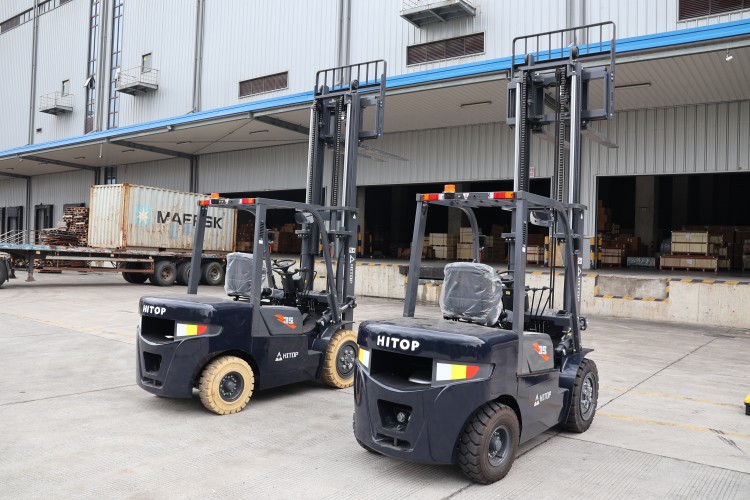
HITOP FORKLIFT, a leading supplier of premium material handling and aerial work equipment, is proud to announce the successful shipment of a diverse range of industrial machinery to a valued client in Paraguay. This order underscores our commitment to supporting industrial growth and operational efficiency across South America.
How does a forklift Side-Shift & Fork Positioner work? How does a forklift Side-Shift & Fork Positioner work?
Aug .05.2025
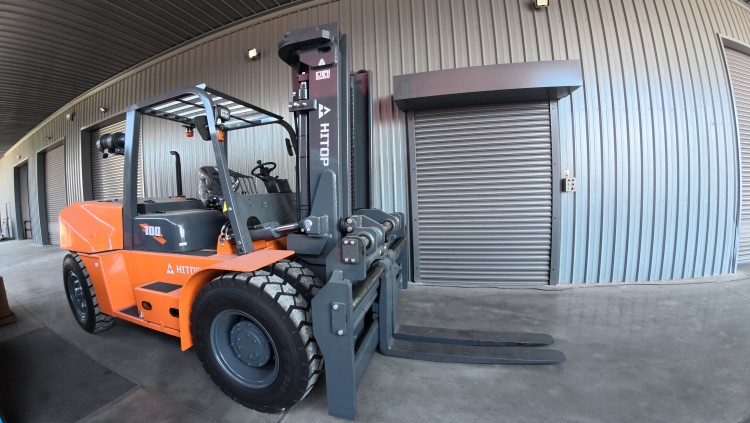
Ever struggled to perfectly align forks with a pallet, especially in tight spaces? Or wasted time manually adjusting fork spacing for different-sized loads? Forklift side-shifters and fork positioners are game-changing attachments designed to solve these exact problems, drastically improving efficiency and safety. While their names sound similar, they serve distinct purposes. Let's dive into how each one works and where they shine.